Marketing & Reviews
Fishing Guide Marketing: What Actually Books Trips
How your website, Google profile, reviews, fishing reports, Google Ads and email work together to book trips.

Nobody becomes a guide because they love marketing. But here’s the uncomfortable math of this business: two guides with the same skills on the same water rarely end up with the same calendar, and the difference is almost never the fishing. It’s bookings. Guiding is a business, and marketing belongs at the front of it, not bolted on when the calendar looks thin.
The good news is that the bar is low. Most guides have a Facebook page that hasn’t been touched in months, an old website or none at all, a half-finished Google profile and a dozen reviews. That’s the competition. A guide who puts steady, unglamorous work into fishing guide marketing can own a local market, not because they’re a marketing genius, but because almost nobody else is trying.
What fishing guide marketing actually is
Digital marketing for a guide comes down to a handful of channels that all point at each other. Think about how a client actually finds and books a guide. A buddy mentions your name at work. That night he searches you on Google, finds your Business Profile, reads a few recent reviews and clicks through to your website. He skims your trip page and your last fishing report, checks Instagram to see if the fish are recent, and three days later he books.
Every piece of that did a job, and if you take any of them away the chain gets weaker:
- No website
- The search dead-ends at a Facebook page and a phone number, and some of those people quietly book the guide who looked more established.
- No reviews
- You look inactive next to the boat with 120 of them.
- A stale Instagram
- People start to wonder if you’re still guiding.
- No Google profile
- You’re not in the map results where the search started.
- No email list
- The client you fished two years ago forgot your name, and his next trip went to whoever showed up in his search.
None of these works alone. Your website is the hub, because it’s the one you own, it’s where Google sends strangers and it’s where booking happens. Everything else builds trust and points back to it.
Your website is where the booking happens
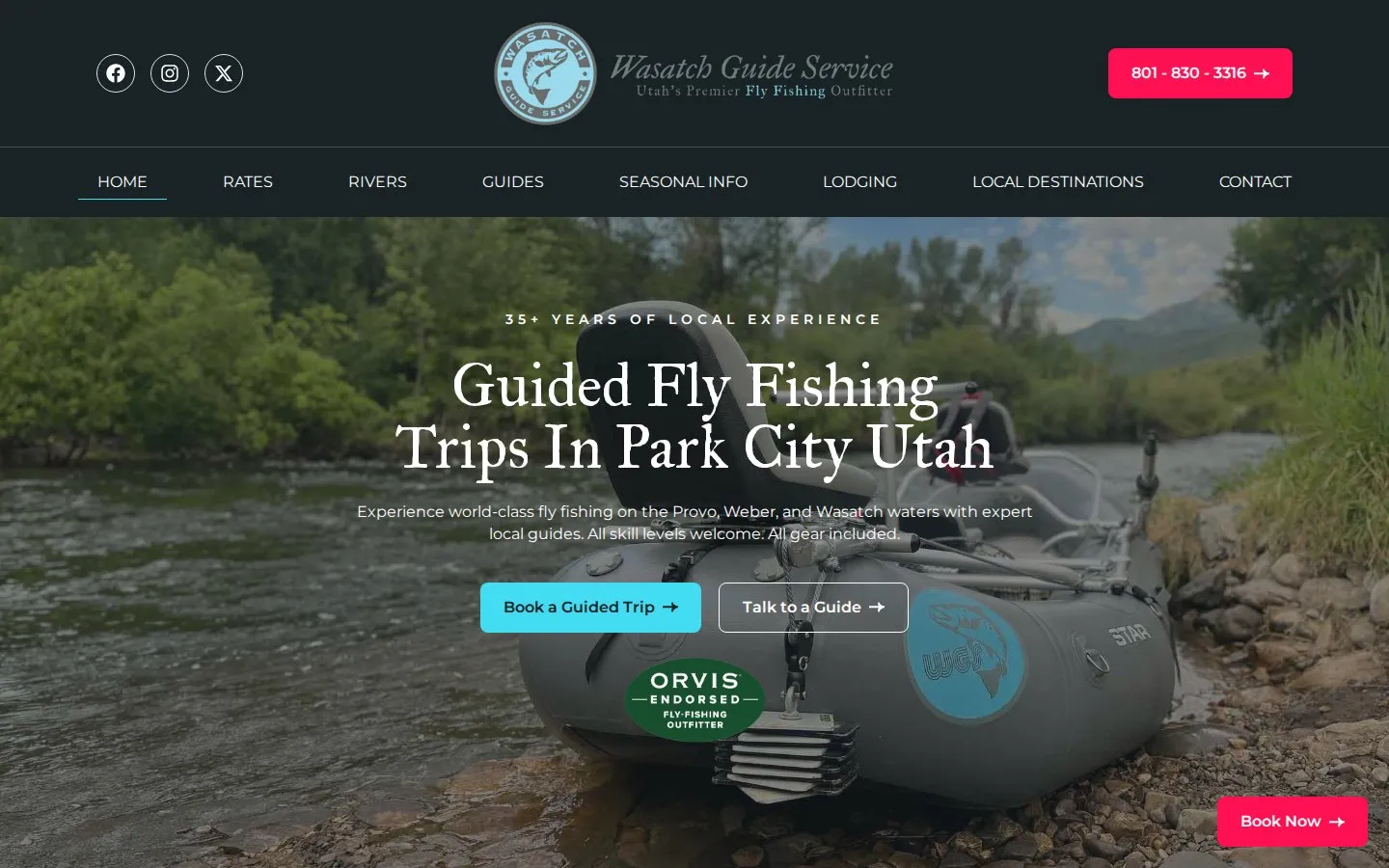
A good guide website answers the questions clients ask before they book: what trips you run, what they cost, what’s included, where you meet and when the fish are there. Then it lets them pick a date and book without waiting for you to get off the water. If your site can’t take a booking, every other piece of marketing you do leaks. Online booking is what turns someone browsing at 9pm into a booked trip.
Your site also has to show up on Google. That comes from pages built around the searches clients make, like your town plus “fishing guide,” the fish you target and the trips you run. That’s the SEO side, and it’s the part most guide sites skip.
Online marketing for fishing guides starts on Google
Most people looking for a guide start with a Google search, and the first thing they see is usually the map pack: three businesses with a map, sitting above the regular results. Those three get a big share of the calls. Your Google Business Profile decides whether you’re one of them, so fill it out completely, pick the right category, list each trip as a service, add photos through the season and link it to your website.
Reviews feed it. The guides with big review counts aren’t luckier. They ask every client, every time, usually with a text and a photo from the trip. Our post on how to get more Google reviews walks through the system that works.
Content marketing for fishing guides: fishing reports and trip pages
Content marketing sounds like something an agency sells, but for a guide it’s simple: write down what you already know. That means a fishing report every week or two, a page for each fish you target and a page for each season. Reports give Google something fresh to read, they show up when people search your river or bay plus “fishing report,” and they show clients you’re catching fish right now. Species and season pages catch the people who plan a trip months out.
You don’t need to be a writer. A few lines about what you caught, where and on what, plus a photo, is plenty.
Fishing guide advertising: Google Ads and Facebook
Google Ads put you at the top of the results today, while your site earns its rankings. They work best on searches where someone is ready to book, like “fishing guide” plus your town, and only when your site can take the booking. They stop the day you stop paying, so treat them as a way to fill open dates, not a replacement for showing up on your own.
Facebook and Instagram ads are better for staying in front of people who already know you: past clients, people who visited your site and locals who follow fishing pages in your area. They rarely book a stranger on the first look, but they’re a cheap reminder when booking season opens.
Social media and email
Social is real marketing, but it’s a feed that buries everything in a couple of days. Use it to show this week’s fish and to send people to your site, not as your only home online. If Instagram is your whole presence, one hacked account or one algorithm change takes your business with it.
Email is the most underrated channel a guide has. Your past clients already like you. One email when booking season opens, with your dates and a couple of photos from last year, fills more trips than most ads will. Collect emails when people book and send a few a year.
Booking platforms like FishingBooker
Marketplaces like FishingBooker can put your boat in front of people you wouldn’t reach on your own, and they can help a brand-new guide get first reviews. They also take a cut of every trip, and the clients they send tend to book through them again instead of through you. Use them to fill gaps if you want, but don’t let them become your business. We ran the numbers in FishingBooker vs. your own website.
What owning your market looks like
In most guide markets, owning the local search results means showing up everywhere a client might look:
- The map pack for “fishing guide” or “fishing charters” plus your towns, driven by your Google profile and reviews.
- The regular results under it, driven by your website’s trip, species and FAQ pages.
- The more specific searches, like a species plus your water or your water plus “fishing report,” driven by species pages and reports.
- The social check that follows, driven by an Instagram or Facebook that shows this month’s fish.
- The repeat booking, driven by an email list and a message before the season.
In a big tourist port, getting all five takes steady work. In most guide markets, only two or three competitors are even trying. The window is open, but every year a few more guides figure this out.
An hour a week, once it’s set up
This isn’t a grind once the foundation is built. For a guide with a site that ranks, a complete profile and a review habit, the weekly routine is a few photos to Google and Instagram, a review link texted after each trip, a fishing report every couple of weeks and an email when booking season opens. Call it an hour a week in season.
Run it like that for a season and everything starts feeding everything else. Reports bring in search traffic, trips produce photos and reviews, reviews lift your map ranking, map clicks land on the site and the site books trips. That loop is the whole thing. Marketing stops being a chore you’re behind on and becomes something that fills the calendar while you fish.
Where to start
Here’s the order that works: get the website right, finish your Google Business Profile, start asking for reviews, then add fishing reports and email, then get consistent on social. Each piece makes the next one work better.
The foundation is the part we build: sites from $149 a month with the SEO done and hosting included. The hour a week is yours. Tell us about your operation and we’ll show you what it would look like on your water.